Quick answer
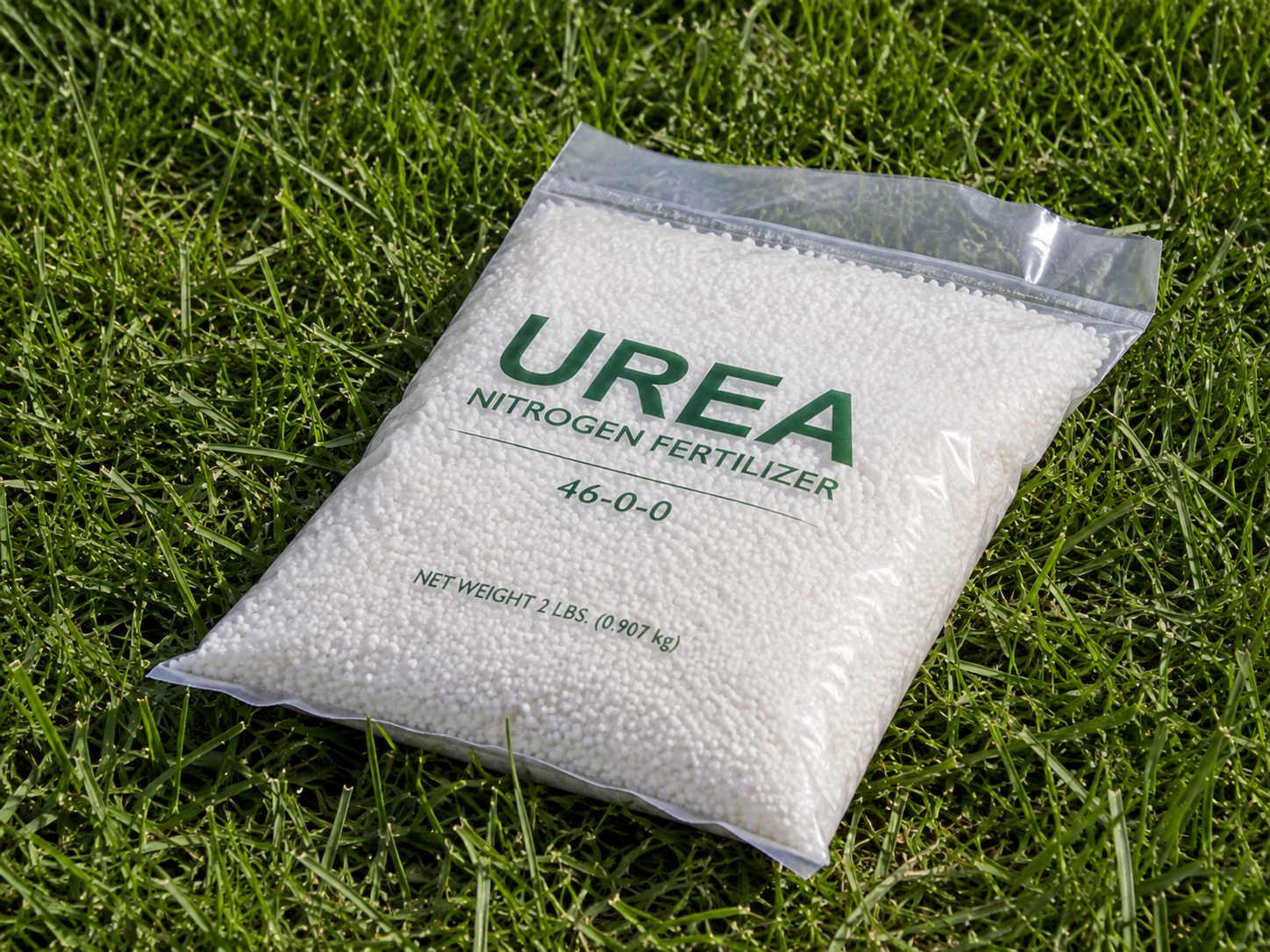
Urea is one of the most concentrated and economical nitrogen sources available, with an analysis of 46-0-0. It is also already used as a nitrogen component in many blended lawn fertilizers, although it usually is not the only nitrogen source in the bag.
For the average homeowner, I would not recommend applying straight granular urea by itself as a normal lawn feeding. At 46% nitrogen, it is extremely concentrated, so a small measuring error, uneven spread, or overlap can put down much more nitrogen than intended.
Where I think urea really shines is liquid spoon-feeding. Dissolving a small, accurately measured amount into a liquid application lets you apply modest amounts of nitrogen alongside other products without dumping a heavy dose onto the lawn all at once.
For me, it has been one of the best bangs for the buck in lawn care.
Why I keep urea around
A lot of fertilizers already contain urea somewhere in their nitrogen package. The difference with buying straight 46-0-0 is that you are getting an extremely concentrated source without all the other nutrients, fillers, or coatings.
That concentration can be a downside when spreading it dry, but it becomes a major advantage when using it carefully in liquid applications.
If you can find a 40-pound bag of urea, it can last a very long time because you may only use a pound or two at a time depending on the size of the lawn and the nitrogen rate you are targeting.
That makes it a very economical way to keep nitrogen available for small supplemental feedings throughout the growing season.
The numbers get big quickly
The first number in 46-0-0 means that 46% of the product's weight is actual nitrogen.
Product needed per 1,000 square feet can be calculated as:
Target pounds of nitrogen ÷ 0.46 = pounds of urea needed
For example, applying 0.5 pound of nitrogen per 1,000 square feet would require about 1.09 pounds of urea per 1,000 square feet.
That illustrates why I am cautious about spreading straight urea granular. Just a little over one pound of product already supplies half a pound of actual nitrogen.
There is not much room for error.
Why I prefer it for spoon-feeding
Instead of using urea as a heavy standalone fertilizer application, I prefer using it when I want to add a small amount of nitrogen through my sprayer.
Spoon-feeding means applying smaller nitrogen doses more frequently rather than trying to supply a large portion of the lawn's nitrogen requirement in one application.
This gives me more control over how aggressively I push growth.
It also allows me to incorporate nitrogen into liquid applications I may already be making, rather than creating another separate granular fertilizer application.
The key is still doing the math based on actual nitrogen, not simply deciding to throw a pound or two into the tank.
Use it during active growth
Urea makes the most sense when Bermuda is actively growing and capable of using the nitrogen.
I avoid pushing nitrogen onto dormant, severely drought-stressed, waterlogged, diseased, or otherwise struggling turf just because it is time for another application.
Nitrogen should fit into the larger seasonal plan.
I also keep track of nitrogen coming from every other fertilizer and liquid product I am applying. Urea may be inexpensive, but inexpensive nitrogen can still become too much nitrogen.
Liquid applications still require accuracy
Dissolving urea in water does not eliminate the possibility of turf injury.
I weigh the amount rather than estimating it, calculate the application based on the square footage being treated, and make sure my sprayer is calibrated.
With foliar applications especially, concentration matters. More nitrogen in the tank does not automatically mean a better result.
My goal with spoon-feeding is a small, controlled feeding, not trying to duplicate a full granular fertilizer application through the sprayer.
Granular urea is different
Straight urea can technically be applied granular, but it is not how I would recommend most homeowners use it.
Because the product is 46% nitrogen, uneven distribution or overlapping passes can create very concentrated areas of nitrogen. It also does not provide phosphorus, potassium, or micronutrients unless those are supplied separately.
If I want a traditional granular feeding, I would generally rather use a fertilizer formulated for turf that provides a more manageable nitrogen rate and spread pattern.
I view straight urea more as a concentrated ingredient in my lawn-care toolbox than as a bag I grab and spread across the yard.
The value is hard to beat
This is where urea has earned a permanent place in my program.
A 40-pound bag of 46-0-0 contains roughly 18.4 pounds of actual nitrogen.
When you are only adding small amounts of nitrogen at a time, that bag can make a lot of applications.
Compared with buying numerous specialty liquid nitrogen products, straight agricultural urea can be remarkably economical.
If you can find a good source locally, a bag is well worth keeping around for someone who understands the calculations and regularly makes liquid lawn applications.
My repeatable approach
- Make sure the Bermuda is actively growing.
- Decide how much actual nitrogen I want to apply.
- Account for nitrogen already applied from other products.
- Calculate the exact amount of 46-0-0 needed.
- Weigh the urea rather than estimating it.
- Dissolve it thoroughly for a liquid spoon-feeding application.
- Apply it evenly with a calibrated sprayer.
- Record the nitrogen rate in my seasonal application log.
- Watch the lawn's response before deciding when it needs more.
For me, the biggest advantage of urea isn't that it lets me apply more nitrogen. It is that it gives me an inexpensive way to apply exactly the small amount of nitrogen I want.