Quick answer
High-pH soil can make iron, manganese, zinc, and phosphorus less available even when those nutrients are already present in the soil. That is one reason a lawn can test reasonably well for nutrients and still struggle with color or nutrient uptake.
The first step should still be a laboratory soil test. You want to confirm the pH, nutrient levels, and general condition of the soil before automatically adding more nitrogen, phosphorus, iron, or sulfur.
In my own lawn, high soil pH has been something I have actively worked on. I have used elemental sulfur as part of a long-term strategy and also selected nitrogen sources such as ammonium sulfate, which supplies both nitrogen and a significant amount of sulfur. Neither is an instant correction, but they can be useful tools when they fit the soil test and the overall fertilizer program.
High pH changes how nutrients behave
When soil pH gets too high, the problem is not always that nutrients are missing. Sometimes they are simply becoming chemically less available to the plant.
Iron is one of the most noticeable examples because Bermuda can begin looking pale or yellow even though iron is technically present in the soil. Manganese, zinc, and phosphorus availability can also be affected.
That is why throwing more fertilizer at a yellow lawn is not always the answer.
Confirm that pH is actually the problem
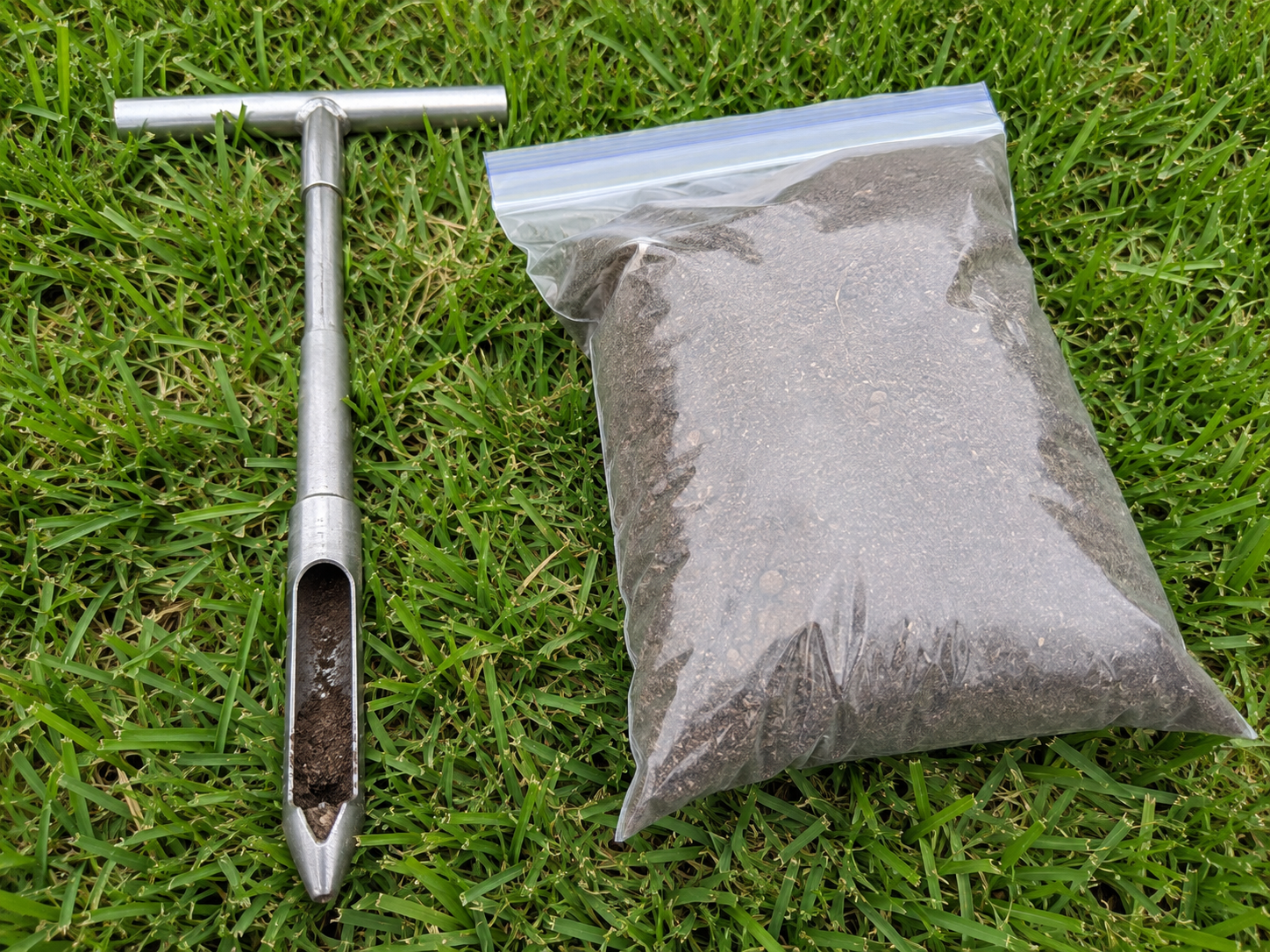
Use representative samples from consistent lawn areas and send them to a laboratory that provides turf recommendations.
A regional soil map, inexpensive probe, or visual diagnosis cannot replace a good root-zone soil test.
Look at pH alongside:
- Phosphorus
- Potassium
- Organic matter
- Micronutrient concerns
- Soil texture
- Laboratory comments and recommendations
Also remember that yellow Bermuda can come from cool soil, excess moisture, drought, shade, compaction, disease, root damage, or scalping. Rule those problems out before assuming fertilizer will fix the color.
Elemental sulfur: one of my tools for high-pH soil
Elemental sulfur can be used to gradually acidify soil. This is something I have incorporated into my own lawn because I am dealing with high-pH soil and want to improve nutrient availability over the long term.
The important word is gradually.
Elemental sulfur does not directly lower soil pH the moment it is applied. Soil microorganisms have to oxidize the sulfur and convert it into acidic compounds. Because of that, the response depends heavily on:
- Soil temperature
- Moisture
- Microbial activity
- Sulfur particle size
- Soil texture
- Calcium carbonate content
- The buffering capacity of the soil
Warm, actively growing conditions generally provide a better environment for this biological process than cold soil.
That also means sulfur should not be treated like a quick-response fertilizer.
Ammonium sulfate can serve two purposes
Another strategy I use is choosing nitrogen sources that make sense for both turf growth and my soil conditions.
Ammonium sulfate is approximately 21% nitrogen and 24% sulfur, so it can provide nitrogen for Bermuda growth while also supplying sulfur.
The ammonium portion of the fertilizer also creates an acidifying effect as it is converted in the soil. Over repeated applications, ammonium-based nitrogen sources can influence the chemistry of the root zone more than some other nitrogen sources.
That does not mean you should increase nitrogen just to lower pH.
Your nitrogen rate still needs to fit the Bermuda's seasonal needs. Think of ammonium sulfate as a way to make your normal nitrogen applications work toward another long-term soil-management goal rather than adding unnecessary fertilizer.
Sulfur is not a shortcut
It is very easy to hear "sulfur lowers pH" and assume that more sulfur will solve the problem faster.
That is not how I would approach it.
Too much elemental sulfur can create an excessively acidic surface layer, injure turf, increase soluble salts, or create nutrient imbalances. This is especially important in an established lawn where most amendments are being applied from the surface rather than incorporated deeply into the soil.
I prefer to think of sulfur as a measured, long-term correction strategy.
Apply a supported amount, continue managing the lawn normally, and use future soil tests to see whether the chemistry is actually moving in the right direction.
High-pH Texas soils can be difficult to permanently change
This is an especially important consideration in areas with calcareous soil or significant amounts of calcium carbonate.
The soil can have tremendous buffering capacity.
You may apply an acidifying material, temporarily influence the upper root zone, and then have the underlying soil chemistry continue pushing the pH upward.
Because of that, the realistic goal may not be turning a naturally alkaline soil into a perfectly acidic soil.
The better goal may be:
Improve the root-zone environment enough that Bermuda can efficiently access nutrients and perform well.
That is how I look at my own lawn. I am trying to gradually improve the conditions rather than expecting one sulfur application to permanently change the native soil.
Choose fertilizer based on what the lawn actually needs
Continue calculating nitrogen according to your Bermuda program and active growth.
Do not use additional nitrogen simply to chase darker green color.
If the soil test already shows adequate or high phosphorus, adding more phosphorus can actually make some micronutrient problems worse.
This is another reason a soil test is so valuable. It allows you to choose fertilizers based on what is missing instead of buying fertilizer based only on the three numbers printed on the bag.
Iron can help manage symptoms
Iron can be extremely useful in alkaline soil because it can improve turf color without causing the rapid shoot growth associated with additional nitrogen.
A labeled soluble or chelated iron product can provide a much faster visual response than trying to change soil pH.
But iron and sulfur are doing two different jobs.
Iron is primarily managing the symptom.
Sulfur and acidifying fertilizer strategies are attempting to improve the underlying soil environment.
In alkaline soil, some soil-applied forms of iron can quickly become unavailable again, which is why product form and application method matter.
Always follow the product label, and be careful around concrete, stone, fences, and other hard surfaces because many iron products can stain badly.
Think in seasons, not days
Changing established high-pH soil can take years.
That does not mean the strategy is failing.
The goal is to make small, controlled improvements while continuing to grow healthy Bermuda at the same time.
In my own lawn, I would rather:
- Test the soil.
- Identify the actual nutrient limitations.
- Keep nitrogen within the proper seasonal range.
- Use nitrogen sources such as ammonium sulfate when they fit the program.
- Use measured elemental sulfur applications when appropriate.
- Use iron when I want to manage chlorosis or improve color.
- Retest the soil and watch the trend over time.
The goal is not to force the soil to a perfect number as quickly as possible.
The goal is to create a better nutrient environment for the grass while keeping the lawn healthy during the process.