Soil Testing: The Best Starting Point for a Serious Lawn Plan
A soil test is one of the best places to start if you’re serious about improving your lawn.
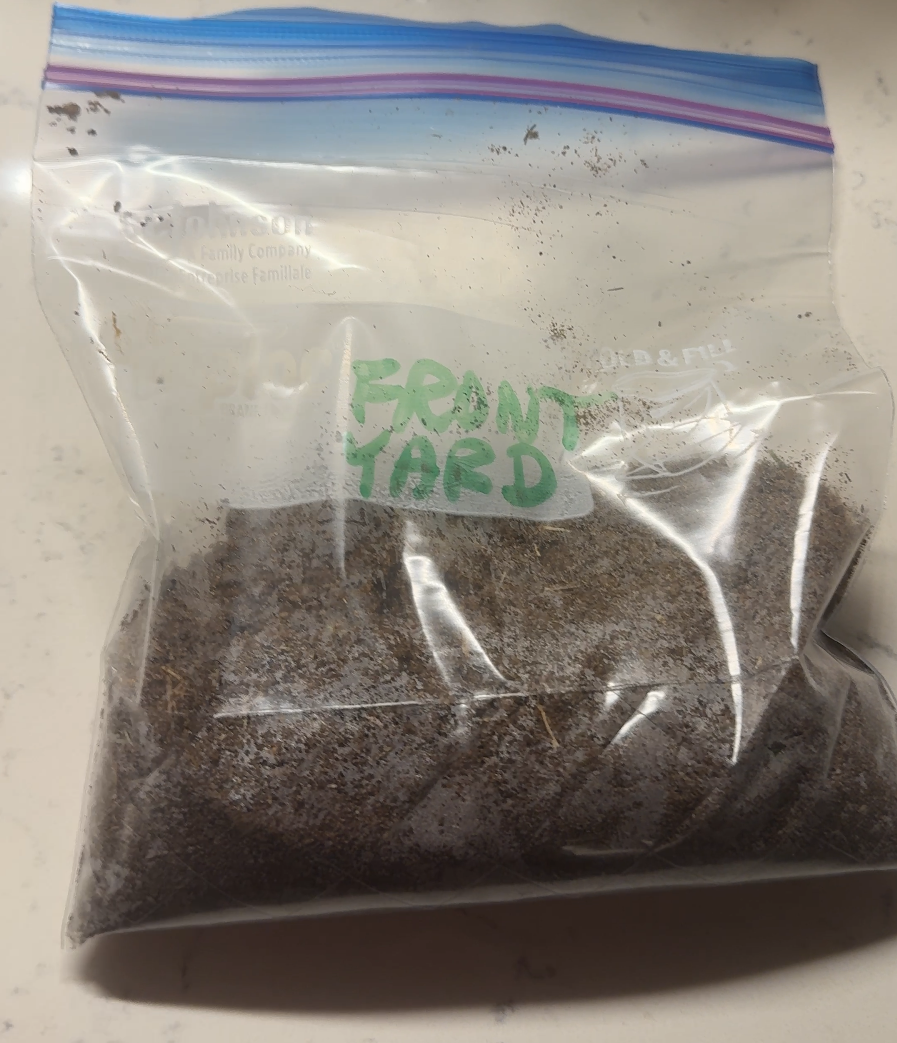
To start my season, I had Texas A&M perform a routine soil analysis on both my front and back lawns. The goal was to see where my soil currently stands and use that information to build a fertilizer plan for the season.
Instead of blindly applying a complete fertilizer every few weeks, a soil test helps tell you what your lawn actually needs.
The goal is a thriving lawn now while improving the soil long-term
I don’t look at a soil test as something that needs to be corrected overnight.
The goal is to keep the grass green, healthy, and actively growing while gradually improving nutrient levels over time.
This is especially important when using fertilizers that contain multiple nutrients. You may need phosphorus or potassium, but the fertilizer carrying those nutrients may also contain nitrogen. If you aren’t paying attention, you can end up applying more nitrogen than your lawn needs simply because you are trying to correct something else.
I like to separate the idea of feeding the grass from correcting the soil.
Nitrogen is mostly about managing current growth.
Phosphorus, potassium, pH, and micronutrients are more about understanding and improving the soil over time.
Nitrogen drives green growth
Nitrogen is the nutrient most directly associated with green color and active leaf growth.
For actively growing Bermuda grass, a common upper range to keep in mind is roughly 1 pound of actual nitrogen per 1,000 square feet per month during periods of strong growth.
The math sounds harder than it is.
If you have a fertilizer labeled:
20-0-0
that means it contains 20% nitrogen.
If you apply 5 pounds of that fertilizer:
5 lb × 20% = 1 lb of actual nitrogen
If that is spread over 1,000 square feet, you applied:
1 lb of nitrogen per 1,000 sq. ft.
That is why understanding actual nitrogen matters more than simply following a spreader setting on the bag.
Quick-release vs. slow-release nitrogen
Not all nitrogen becomes available at the same speed.
Quick-release nitrogen can give the lawn a fast response.
Slow-release nitrogen is designed to feed over a longer period, often several weeks.
When planning fertilizer applications, pay attention to both the total nitrogen rate and how much of it is slow release.
Don't focus too heavily on nitrogen from the soil test
Nitrogen moves through the soil and is used by the turf relatively quickly.
Because of that, I don’t use the nitrogen number on a routine soil test to determine my entire seasonal nitrogen program.
I manage nitrogen based more on the grass type, growing conditions, time of year, and how aggressively I want the lawn growing.
Think of nitrogen as the lawn's regular food.
The rest of the soil test helps tell us what needs attention in the pantry.
Phosphorus
Phosphorus is where soil testing becomes especially useful.
It is important for root development, plant energy, and overall turf health.
Unlike nitrogen, phosphorus can remain in the soil for a long time and generally moves very slowly.
That means I don’t want to apply phosphorus just because it happens to be included in a fertilizer.
If the soil test shows phosphorus is already adequate or high, continuing to apply more may provide very little benefit.
If it is low, I can intentionally choose fertilizers that contain phosphorus and work toward improving it gradually.
Phosphorus availability is also affected by soil chemistry.
In high-pH soils, which are common in Central Texas, phosphorus can become tied up and less available to the plant.
That is another reason I would rather make calculated applications over time than dump a large amount onto the lawn at once.
Potassium
Potassium is the third number on a fertilizer bag.
For example:
15-5-10
means the fertilizer contains nitrogen, phosphate, and potash in those percentages.
Potassium does not create the dramatic green-up that nitrogen does, so it is easy to overlook.
But it plays an important role in:
- stress tolerance
- water regulation
- plant strength
- heat and drought tolerance
- recovery
I think of potassium as something that helps build a stronger plant rather than something that simply makes the lawn greener tomorrow.
If my soil test shows potassium is low, I can intentionally choose a fertilizer or potassium source that corrects it without unnecessarily adding nutrients I already have enough of.
Soil pH matters
Soil pH may be one of the most important numbers on the entire test.
It tells you whether your soil is acidic, neutral, or alkaline.
That matters because nutrient availability changes depending on pH.
A nutrient can be present in the soil but still be difficult for the grass to access.
This is especially relevant in areas with naturally alkaline soil.
It is also why I would not recommend blindly adding products such as lime just because someone else had success with them.
Their soil may be completely different from yours.
Micronutrients
Nitrogen, phosphorus, and potassium get most of the attention, but turf also needs smaller amounts of nutrients such as:
- iron
- manganese
- zinc
- copper
- boron
Iron is probably the one lawn owners notice most because it can help improve dark green color without causing the same surge of growth that comes from nitrogen.
Micronutrient availability is also heavily influenced by soil pH, so the numbers should always be viewed in context.
How to take a good soil sample
Your test is only as good as the sample you send in.
Don’t grab one handful of soil from one spot and assume it represents your entire lawn.
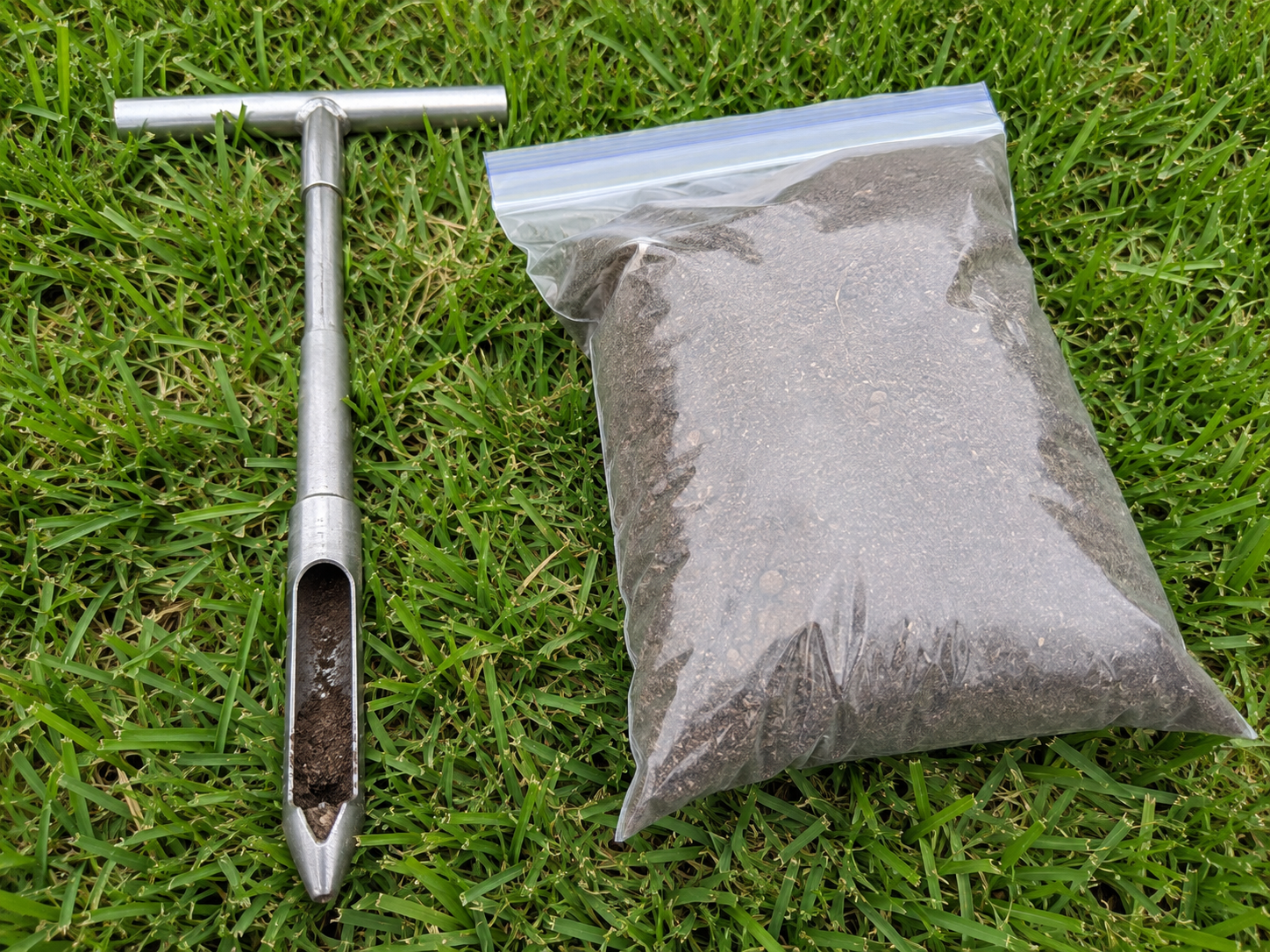
Instead, take several small samples from different areas of the lawn, combine them, mix them together, and submit a representative portion.
Avoid unusual locations such as:
- fertilizer spill areas
- flower beds
- right beside the foundation
- compost piles
- areas that have been treated differently
If two areas of your property are managed differently or have noticeably different soil, test them separately.
That is why I tested my front and back lawns independently.
Also, avoid taking a sample immediately after fertilizing. You want the test to represent the soil, not measure fertilizer you just applied.
How I use the results
Once the report comes back, I break it down into a few questions.
What is low?
Those are nutrients I may intentionally work on during the season.
What is already adequate?
There is no reason to keep adding something just because it is commonly found in lawn fertilizer.
What is already high?
This can be just as important as finding a deficiency.
If phosphorus is already high, for example, I can start looking for fertilizers with little or no phosphorus.
What does the pH tell me?
Before trying to correct every nutrient number, I want to understand whether soil chemistry may be affecting availability.
Build the fertilizer around the soil test
This is probably the biggest benefit of testing.
Instead of asking:
“What fertilizer should I put down this month?”
I can ask:
“What does my lawn actually need?”
Maybe I need nitrogen and potassium but no phosphorus.
Maybe I need nitrogen only.
Maybe my nutrient levels are fine and the bigger issue is irrigation, mowing, compaction, or something else.
There is no single fertilizer that is perfect for every lawn.
Understand the numbers on the bag
Every fertilizer bag will have three numbers, such as:
24-0-11
Those represent the percentages of:
Nitrogen – Phosphate – Potash
Once you understand those numbers and know your lawn's square footage, fertilizer planning becomes much easier.
You are no longer guessing.
Don't try to fix everything at once
A soil test gives you information.
It does not mean every number needs to be aggressively corrected immediately.
I would rather make reasonable applications through the growing season, keep the turf healthy, track what I apply, and test again later.
That gives me a way to see whether my plan is actually moving the soil in the right direction.
My approach is simple:
Test → Build a plan → Make gradual corrections → Track applications → Observe → Test again
The goal is not to chase perfect laboratory numbers.
The goal is to use the information to make better decisions and grow a healthier lawn.
Soil testing takes the guessing out of lawn care
There are endless fertilizers, lawn products, and opinions about what you should apply.
A soil test gives you something much more useful:
a starting point based on your lawn.
Once you know your nutrient levels, soil pH, lawn size, grass type, and goals, fertilizer selection becomes much more intentional.
Instead of putting something down because the bag says “summer fertilizer” or because someone else used it, you can build a plan based on what your lawn actually needs.
That is one of the best places to start.