Quick answer
Irrigation depth describes how high the applied water would stand if it were perfectly uniform. One inch over 1 square foot equals about 0.623 gallon, so 1 inch over 1,000 square feet is about 623 gallons. One-half inch over the same area is about 312 gallons.
Use inches to compare rainfall, irrigation, and turf guidance. Use gallons for water use, cost, storage, or flow calculations. Both require an accurate treatment area.
The basic conversion
Gallons equal area in square feet multiplied by target depth in inches multiplied by 0.623. For a 4,000-square-foot zone receiving 0.75 inch, the theoretical volume is 4,000 x 0.75 x 0.623, or about 1,869 gallons.
To convert gallons back to inches, divide gallons by area and then divide by 0.623. Keep units visible in the calculation so square feet, inches, gallons, and minutes are not mixed accidentally.
Why gallons do not guarantee coverage
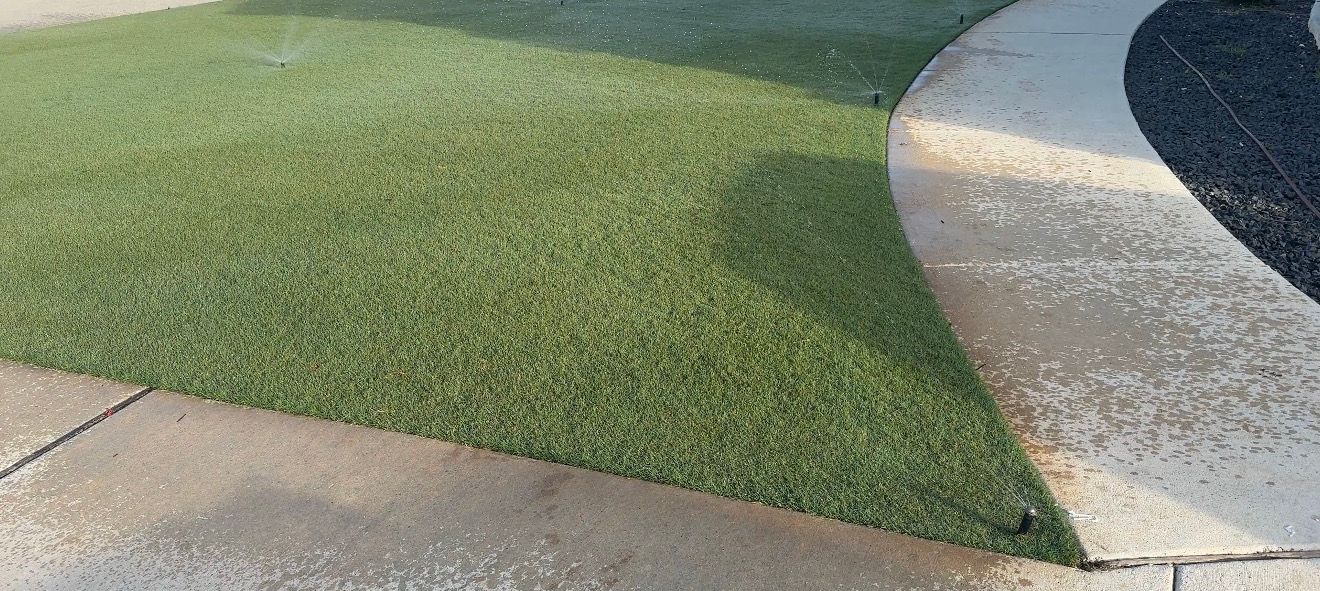
A meter can show that 1,869 gallons passed through the system without showing where it landed. Leaks, mist, wind drift, blocked heads, overspray, runoff, pressure differences, and poor spacing can leave one area soaked and another dry.
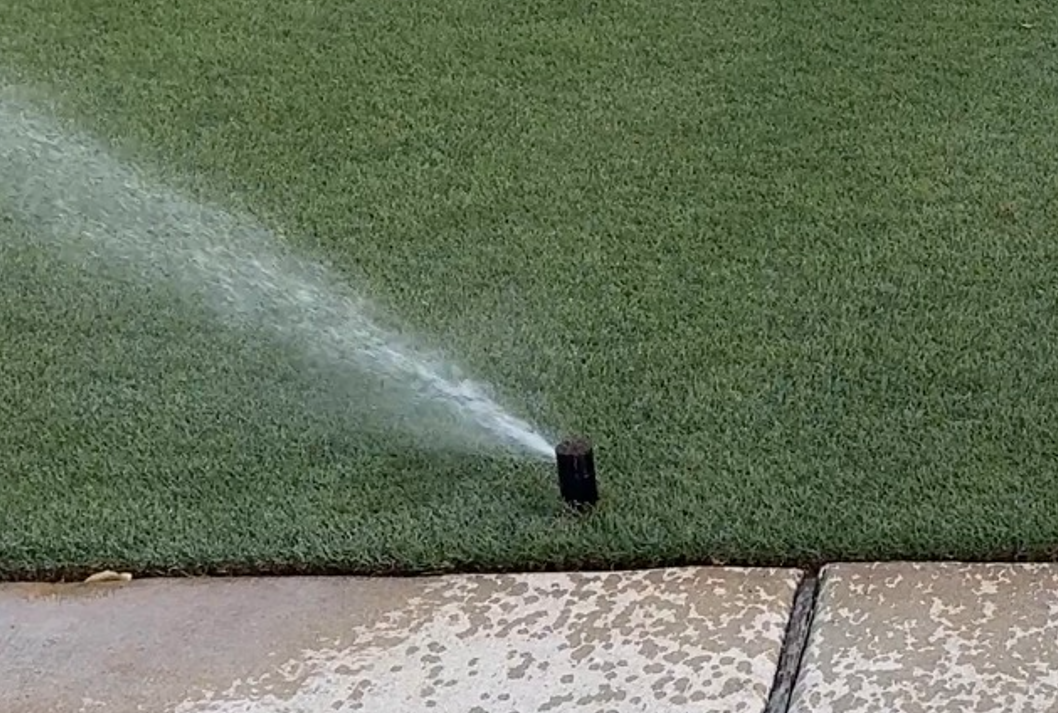
Account for 25-30% evaporative, wind drift, mist, and overspray losses with most sprinkler heads for this reason when calculating by flow rates.
Convert flow into run time
If a zone's verified flow is 20 gallons per minute, delivering a theoretical 1,000 gallons takes 50 minutes. But flow-based run time assumes the mapped area and flow are correct and that all water reaches the turf uniformly.
A catch-can rate is often more useful for scheduling. If the zone applies 0.5 inch per hour and the target is 0.75 inch, the total run time is 1.5 hours. Split that time into cycles when runoff begins before the total is delivered.
Count rainfall in inches
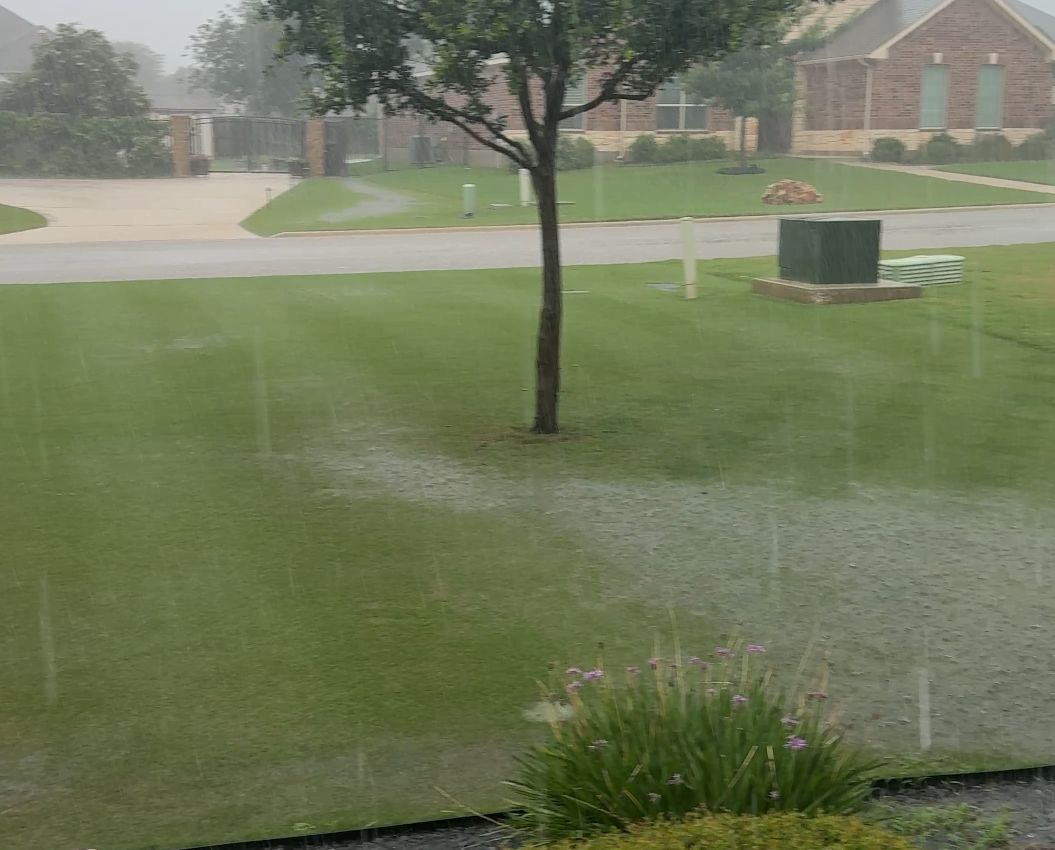
A rain gauge reports depth directly, making it easy to subtract useful rainfall from an irrigation target. A half-inch rainfall is the same geometric depth regardless of lawn size, while its gallon equivalent increases with area.
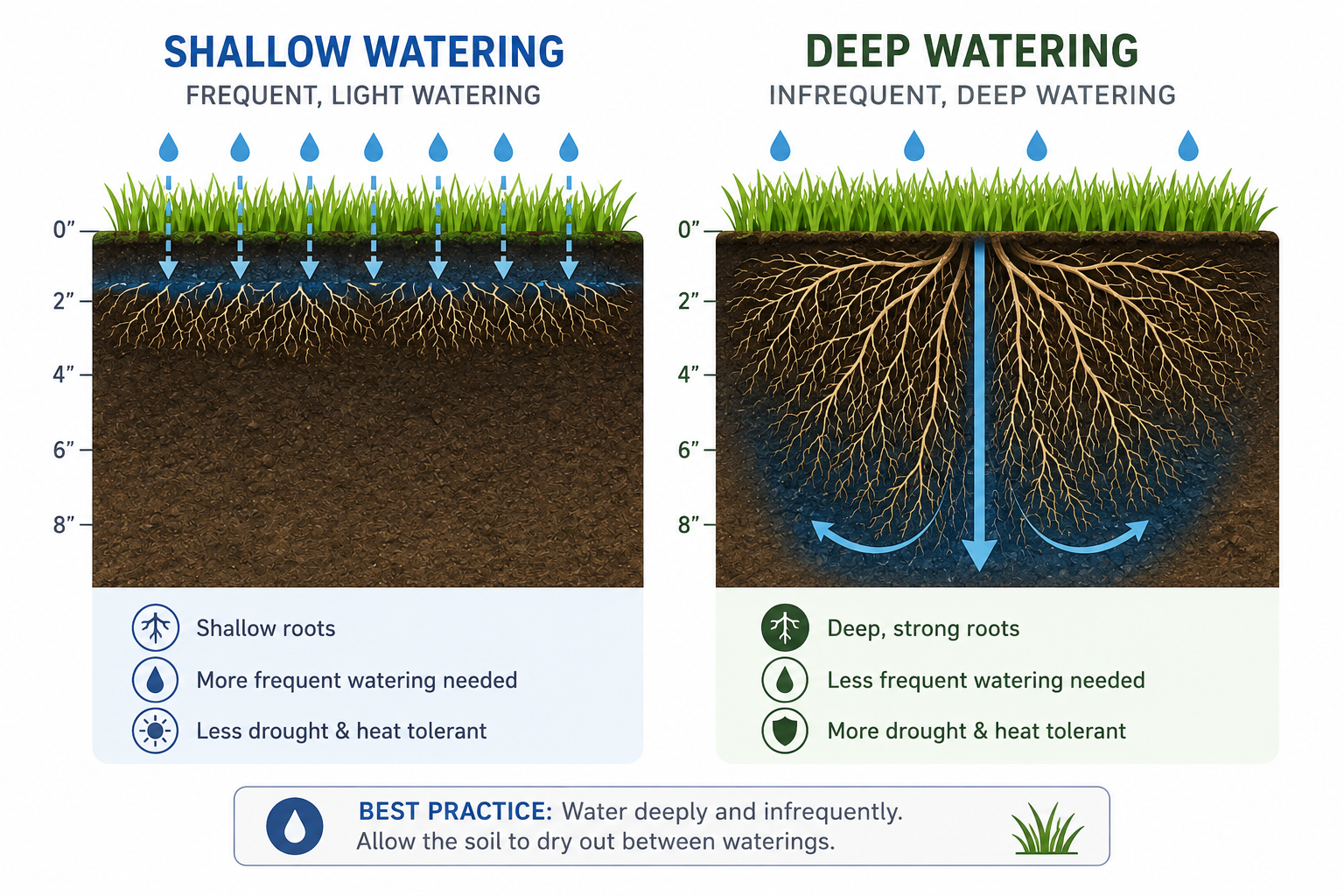
Not every measured rain event infiltrates fully. Saturated soil, slope, crusting, and intense rainfall can create runoff. Use the gauge with field inspection rather than treating every recorded inch as stored root-zone water.
Worked-zone checklist
- Measure the irrigated turf area, excluding beds and pavement.
- Choose a depth supported by current lawn need and local guidance.
- Calculate theoretical gallons with area x depth x 0.623.
- Measure actual precipitation rate and distribution with catch cans.
- Check verified flow or meter use for leaks and cost planning.
- Split run time where needed to prevent runoff.
- Record rainfall and delivered depth rather than minutes alone.