
Quick answer
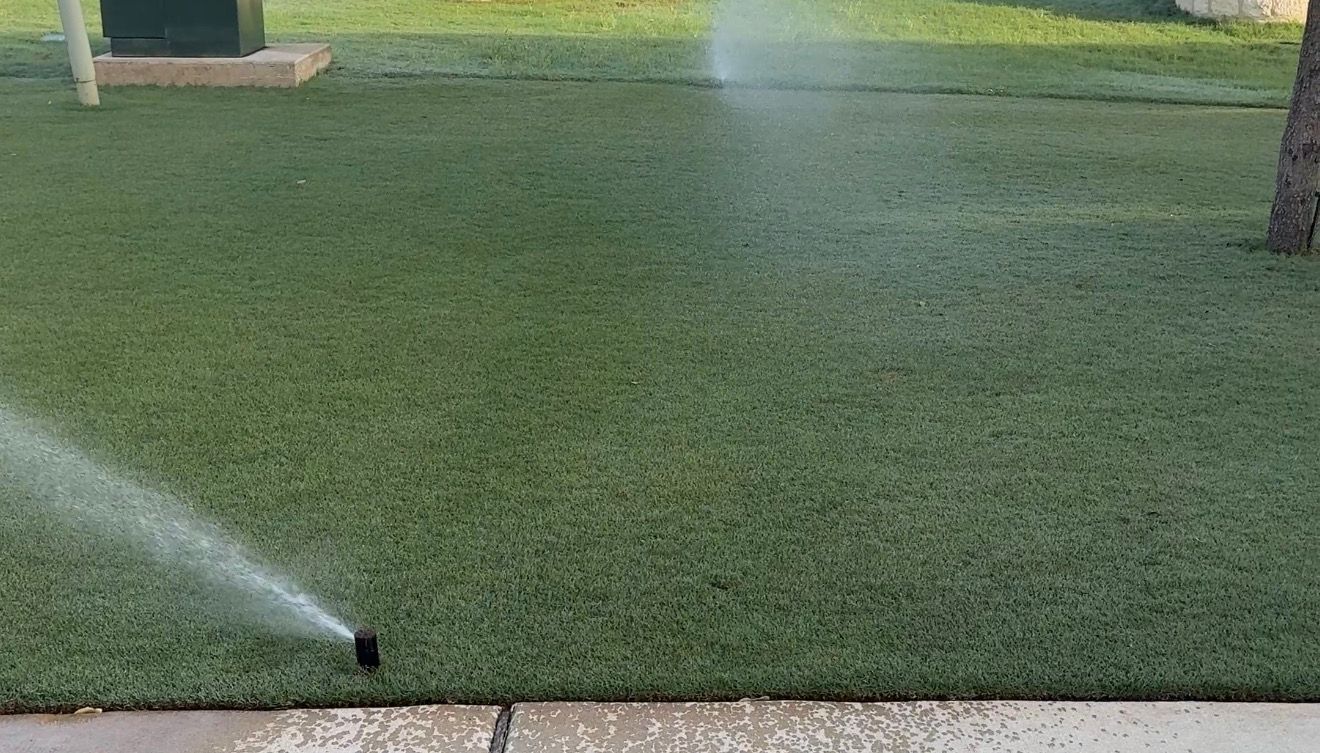
Early morning, before daytime heat and wind increase, is generally the best time to irrigate an established Bermuda lawn. More applied water can reach the soil, and the leaves can dry after sunrise instead of remaining wet through the night.
The exact clock time depends on system run length, local rules, sunrise, pressure availability, and the number of zones. Work backward so the final zone finishes during the early-morning window without creating runoff.
Why early morning works
Temperatures and winds are often lower before and near sunrise, reducing evaporation and drift compared with a hot, windy afternoon. Water pressure may also be more stable than during peak household demand, though that must be measured locally.
Leaves wet from irrigation can dry as the morning progresses. That avoids deliberately extending leaf wetness through an entire night, which can favor disease under susceptible weather and turf conditions.
Why midday is less efficient
Watering during strong sun is not inherently a magnifying-glass burn risk, but heat, low humidity, and wind can increase evaporative loss and move droplets off target. Fine mist from poor pressure or worn nozzles makes the problem worse.
An afternoon irrigation may still be warranted to establish turf or relieve severe stress under appropriate guidance. An urgent corrective watering is different from choosing midday as the routine schedule.
Why routine evening watering is risky
Irrigation late in the day can leave foliage wet for a long period as temperature falls and evaporation slows. That does not guarantee disease, but it can add avoidable leaf-wetness hours when pathogens and weather are favorable.
If municipal rules force an evening window, finish as early as permitted, correct drainage and thatch problems, avoid unnecessary frequency, and apply only the measured amount the root zone can accept.
Schedule a multi-zone system
Add the run time and soak delay for every zone to find the total watering window. A six-zone system using repeated cycles may need to start well before sunrise. Smart-controller labels do not guarantee good timing; verify start, soak, and completion behavior after programming.
Do not run all zones for equal minutes unless their measured precipitation rates and needs are equal. Spray, rotor, and drip zones commonly apply water at different rates and should not be scheduled from one generic duration.
Timing checklist
- Check current municipal watering days and hours.
- Measure each zone's precipitation rate and required run time.
- Include cycle-and-soak delays in the total window.
- Schedule the system to finish in the early morning when permitted.
- Use a rain or soil-moisture shutoff where appropriate.
- Observe wind, overspray, runoff, and leaf drying.
- Adjust seasonally instead of repeating one year-round start time.